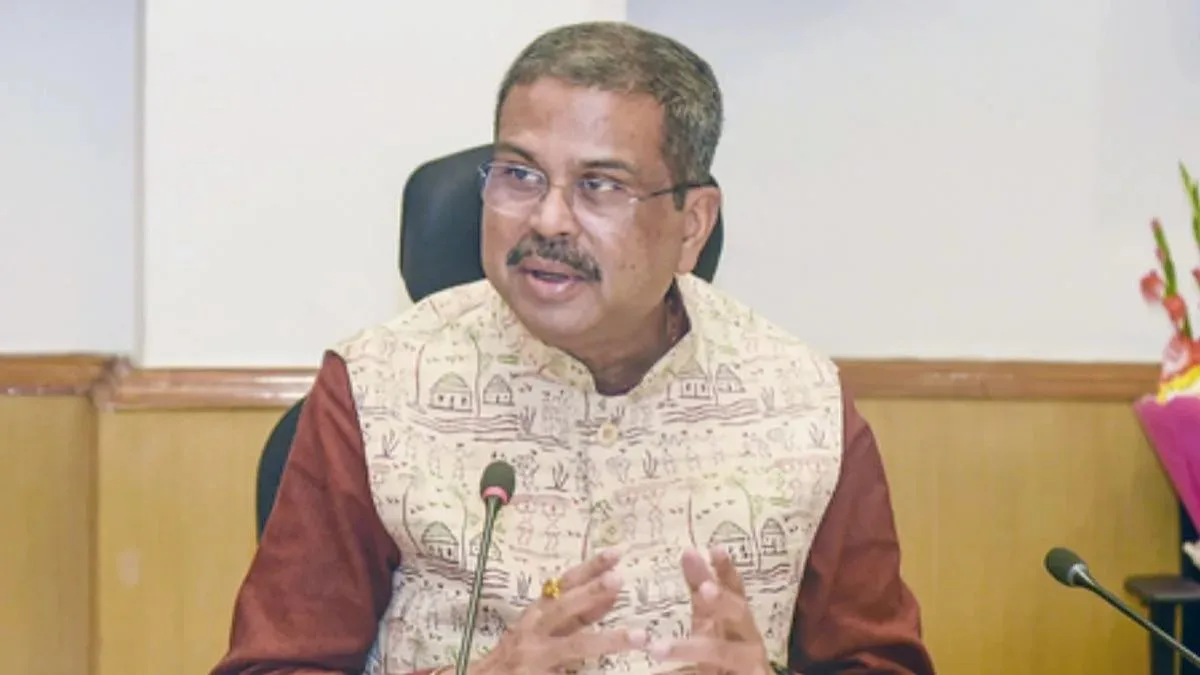
Facing mounting criticism over discrepancies in Class 12 re-evaluation results, Union Education Minister Dharmendra Pradhan on Thursday publicly accepted responsibility for shortcomings in the Central Board of Secondary Education’s (CBSE) newly introduced On-Screen Marking (OSM) system, while assuring students that all genuine grievances would be addressed.
The Minister’s intervention comes after days of complaints from students and parents over alleged anomalies in marks verification and re-evaluation, triggering concerns about the implementation of the digital evaluation mechanism introduced by the Board this year.
Following a high-level review meeting with senior CBSE officials, Pradhan acknowledged that while the transition to digital evaluation was intended to improve transparency and efficiency, the rollout had exposed operational and technical weaknesses.
Advertisement
“This is the first time CBSE has adopted the On-Screen Marking system, and some discrepancies have been noticed. I take full responsibility for the issues and assure students that corrective measures are being taken. No genuine grievance will go unheard,” Pradhan said.
The Minister sought to place the issue in the context of the sheer scale of the CBSE examination process. Nearly 17 lakh students appeared for the examinations this year, generating around 98 lakh answer scripts. With each answer booklet averaging about 40 pages, the Board had to digitise and process close to 40 crore pages for evaluation.
Officials said Pradhan directed CBSE to immediately resolve all pending complaints relating to marks verification and re-evaluation. The Board has also been asked to audit the functioning of the OSM platform and strengthen safeguards against errors.
In a significant move, technical experts from the Indian Institutes of Technology (IITs) at Kanpur and Madras have been roped in to examine the software architecture and identify possible glitches that may have contributed to the discrepancies.
The Minister also addressed complaints regarding payment failures during the re-evaluation process. CBSE has now expanded its payment gateway network by integrating additional banking partners, including State Bank of India, Indian Bank, Bank of Baroda and Canara Bank, to prevent transaction bottlenecks.
While defending CBSE against allegations of large-scale manipulation of marks, Pradhan maintained that there was no evidence of systemic wrongdoing and asserted that procurement and implementation processes had followed government norms.
At the same time, he struck a stern note, warning that accountability would be fixed if any individual or agency was found responsible for irregularities.
“If any person is found responsible for lapses, whether within or outside the CBSE framework, strict action will be taken without exception,” he said.
Pradhan also appealed against attempts to politicise the controversy, arguing that the focus should remain on safeguarding students’ interests and restoring confidence in the examination system.
The episode has raised fresh questions about the challenges of digitising high-stakes public examinations in India, where even minor technological failures can affect the academic futures of lakhs of students.